Florida Man’s Worst Nightmare: Paying Off His House Only to Lose the Roof
It’s a scenario that sounds like a plot twist from a fable or a song by Alanis Morissette – a man pays off his house, only to see it ravaged by a hurricane, leaving him with a massive repair bill and no insurance to cover it.
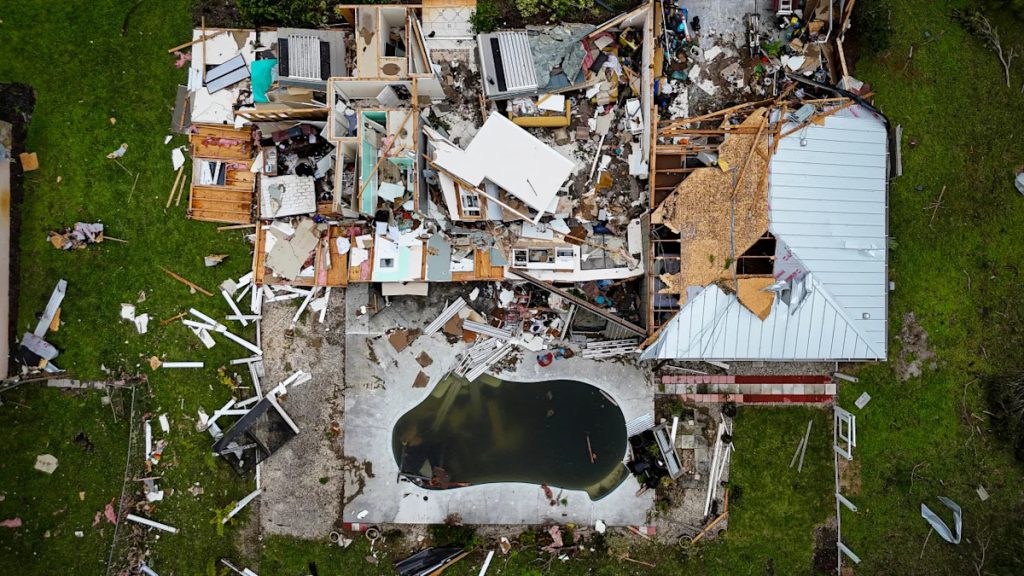
Meet Mike Parrot, a Florida man who, along with his wife, had just paid off their home about two months prior to Hurricane Milton’s devastating category 5 storm in October 2024. The storm ripped the roof right off their home in Bradenton, leaving them to live in their backyard studio while their home was repaired.
Parrot’s situation is not an isolated incident. According to a report by Tampa Bay’s WFLA News, homeowners typically have insurance while they have a mortgage, but once their loans are paid off, they often don’t renew their insurance to save money.
This phenomenon is not unique to Florida. Insurance comparison website Insurify found that about one in five homes in Florida are uninsured, putting the state in the top six states with the most uninsured homes, despite its high climate-related disaster risk.
The cost of home insurance in Florida has increased by 18% in 2025, compared to 2024, making it the most expensive state for home insurance in the country. The national average for home insurance in 2025 is $2,948, but the average for Florida is a staggering $8,292, according to Insurify. The company also notes that Florida has experienced at least 34 billion-dollar weather events since 2020, according to National Oceanic and Atmospheric Administration data.
WFLA News reporter Shannon Behnken notes that homeowners often take the gamble of not having insurance, thinking that the cost of premiums is too high. However, Behnken warns that this is a big risk, especially in areas prone to climate-related weather events. Homeowner’s insurance policies typically cover wind damage, as well as water damage caused by wind damage, but most policies do not cover flooding, which requires separate coverage.
A report by the Miami Herald found that roughly 80% of Florida’s residential structures do not have flood insurance. FEMA notes that just one inch of water flooding in an average-sized home could result in more than $25,000 in damages. An analysis of FEMA data by the Miami Herald also revealed that one in four flood insurance claims come from outside high-risk areas.
While the rising cost of living may make it difficult for some homeowners to afford insurance, it’s essential to consider the financial consequences of not having it. If disaster struck, the repair costs could be even more devastating.
Homeowners and renters should be aware of the risks associated with not having homeowner’s insurance, especially in areas prone to climate-related weather events. It’s crucial to understand the coverage provided by insurance policies and to consider the potential financial consequences of not having it.
In conclusion, Mike Parrot’s story serves as a cautionary tale about the importance of having homeowner’s insurance, even after paying off one’s mortgage. The costs of not having insurance can be catastrophic, and it’s essential to weigh the benefits of insurance against the costs of premiums.
Florida’s homeowners should be aware of the risks associated with not having insurance and take steps to protect themselves from financial ruin in the event of a disaster.