South Korea’s Evidence Loophole: A Decades-Old Provision Sparks Concerns
The recent case of a man accused of killing a high school student in Gwangju has brought to light a decades-old provision in South Korean law that exempts relatives from punishment for destroying evidence to protect a family member.
According to investigators, the father of the suspect, Jang Yun-gi, a serving police officer, disposed of items potentially connected to his son’s alleged crime. However, authorities have not booked the father on an evidence destruction charge due to a provision in the Criminal Act that generally exempts relatives and family members living with a suspect when they destroy evidence on that person’s behalf.
This provision, introduced in 1953, was intended to protect family relationships, particularly in the aftermath of the Korean War. Critics argue that it can now be used as a legal shield to conceal serious crimes. The exemption reflects the view that a person’s desire to protect a relative can arise from natural family affection and that imposing criminal punishment in such cases may be excessively harsh.
However, critics say that the 73-year-old provision no longer reflects a society that places greater emphasis on individual accountability and equal justice. They argue that the problem is particularly serious when a relative works for a law enforcement or judicial agency and may have access to investigative information.
Paragraph 4 of Article 155 of the Criminal Act states that relatives or family members living with the suspect are not punished when they commit the offense on that person’s behalf. This exemption was adopted shortly after the 1950-53 Korean War, when many families had been separated or destroyed. It reflected concerns that the government should not force relatives to inform on one another or intrude excessively into family relationships.
Experts argue that the exemption can prevent punishment even when a public official destroys evidence that investigators might otherwise use in a criminal case. Bae Sang-hoon, a professor of police administration at Woosuk University, suggests that lawmakers should consider excluding senior public officials and employees of investigative or judicial agencies from the exemption when their official duties create a conflict of interest.
The United States and Britain do not provide a comparable blanket exemption from criminal liability solely because a person destroyed evidence to protect a relative. In the United States, a person who conceals or destroys evidence or lies to investigators to help a family member may face federal or state charges, depending on the conduct and jurisdiction.
A bill introduced in the National Assembly on July 2 would remove the exemptions covering relatives who conceal offenders or destroy evidence. The proposal has been referred to the Legislation and Judiciary Committee. Critics argue that this provision is outdated and no longer reflects the values of a modern society.
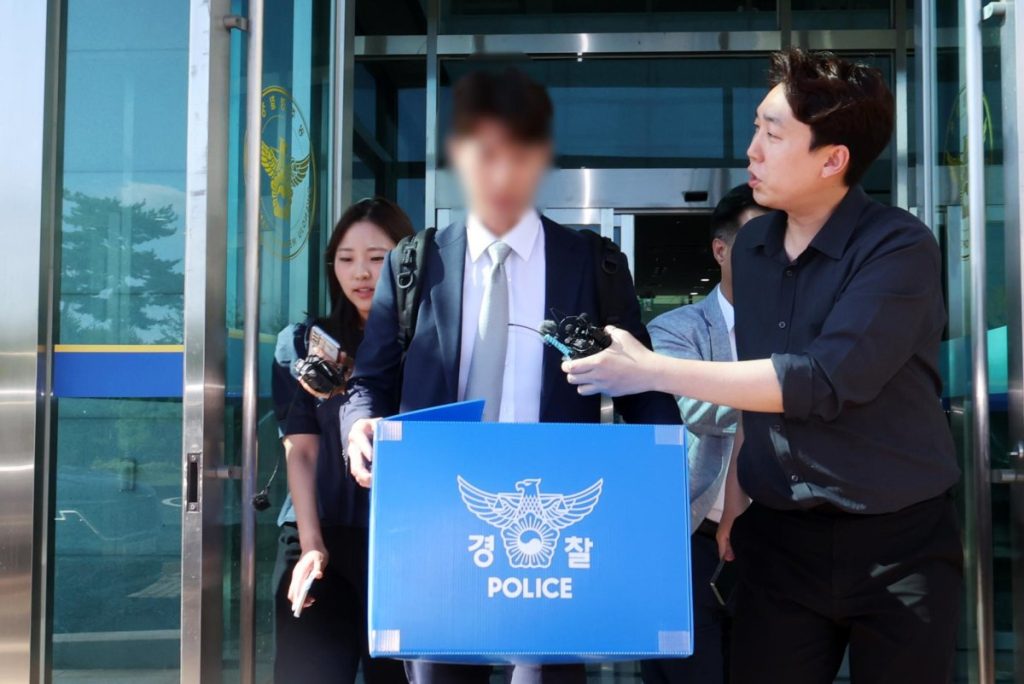
The case has sparked a renewed debate on the need to reform the law and ensure that those who destroy evidence to protect a family member are held accountable for their actions. The National Office of Investigation’s special investigative unit has searched seven locations, including the offices of the Gwangju Metropolitan Police chief and the chief of Gwangju Gwangsan Police Station. The search warrants cited suspected destruction of evidence, according to police.
Prosecutors and police are examining whether officers involved in the original investigation colluded with Jang’s father or leaked investigative information to him. Four police officers have been booked so far: the former chief of Gwangsan Police Station, the head of its criminal investigation division, an investigative team leader, and another member of the investigative team.
The case has raised questions about the need for greater transparency and accountability in the justice system. Critics argue that the exemption can be used to conceal serious crimes and that it is time to reform the law to ensure that those who destroy evidence to protect a family member are held accountable.