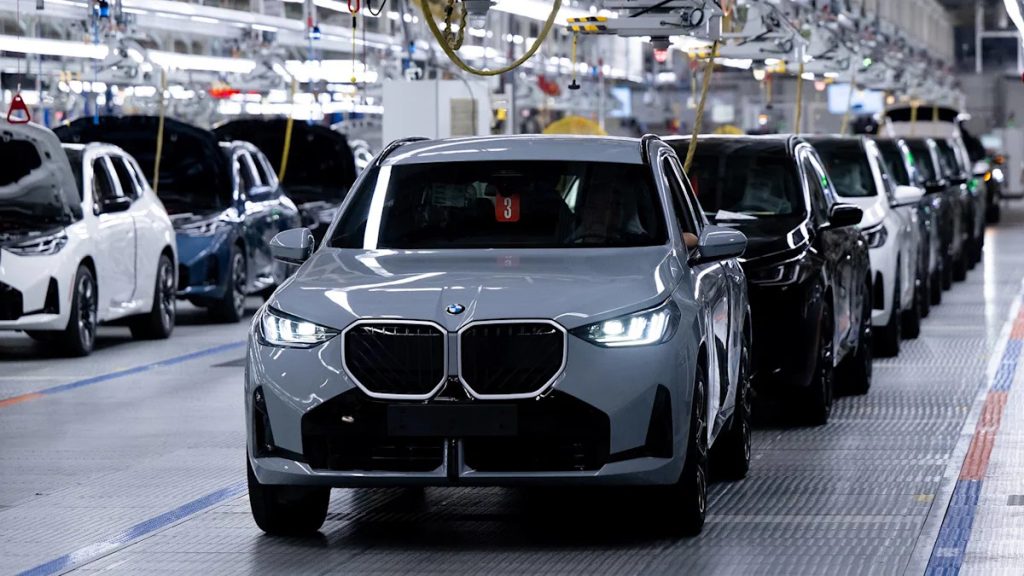
In a stark contrast to its declining sales in China, BMW has solidified its position as the top-selling luxury automaker in the United States, with impressive second-quarter sales.
The German automaker has seen a 13% year-over-year increase in sales in the U.S. market, excluding the smaller Mini brand, with 102,713 vehicles sold in the second quarter. This growth is a significant boost to BMW’s overall sales, with first-half sales reaching 186,944 units, a 4.7% increase from the same period last year.
The majority of these sales, 103,257 units, were of larger and more expensive SUVs, with the X5 being a standout model, selling 41,554 units in the first half of the year. This is a significant increase from last year’s sales figures and highlights the sustained interest in BMW’s overall lineup.
Other notable models that have seen strong first-half gains include the 3 Series, with a 32.3% increase in sales, and the Z4, with a 47.8% increase. These figures demonstrate the resilience of BMW’s U.S. business and its ability to maintain momentum in a global market that is experiencing a decline in sales.
BMW’s U.S. business is not only a source of stability for the company but also a crucial factor in its overall profitability. The brand’s high-margin SUVs, such as the X5 and X6, are performing well in the U.S. market, with demand for both newer and older models appearing consistent.
However, the U.S. market’s growth cannot fully offset the losses in China, where sales have declined by 30.2% in the second quarter and 20.4% year-to-date. This decline has forced BMW to revise its guidance for the 2026 financial year, with its automotive EBIT margin guidance cut to between 1% and 3%, down from 4% to 6% previously.
As the China market becomes less reliable, BMW may become increasingly dependent on other markets like the United States. Together with Europe, America may play a growing role in protecting the brand’s earnings. The company’s reliance on one or two markets could leave it vulnerable to regional economic slowdowns and unpredictable shifts in demand.
BMW’s U.S. Strength Has Limits
While BMW’s U.S. business is in a healthy position and performing as well as management could hope, it is not without its limitations. The company’s reliance on the U.S. market means that it is exposed to regional economic fluctuations and shifts in demand.
Additionally, the launch of the Neue Klasse generation of vehicles in the U.S. market will be a crucial factor in determining the company’s future prospects. While the new models are expected to be a significant improvement over their predecessors, their success cannot be guaranteed.
As the global market continues to experience a decline in sales, BMW’s U.S. business will remain a crucial factor in the company’s overall profitability. However, the company’s reliance on the U.S. market means that it must remain vigilant and adaptable in the face of changing market conditions.
America Keeps BMW’s Momentum Alive
BMW’s U.S. business is a source of stability and profitability for the company, and its continued growth is a testament to the brand’s enduring appeal. The company’s high-margin SUVs, such as the X5 and X6, are performing well in the U.S. market, with demand for both newer and older models appearing consistent.
The company’s ability to maintain momentum in a global market that is experiencing a decline in sales is a significant achievement. It highlights the resilience of BMW’s U.S. business and its ability to adapt to changing market conditions.
As the company continues to navigate the challenges of the global market, its U.S. business will remain a crucial factor in its overall profitability. The company’s reliance on the U.S. market means that it must remain vigilant and adaptable in the face of changing market conditions.