San Francisco has long been a hub for emerging technologies, with the city’s mayor, London Breed, declaring it a testbed for innovative tech in the past. However, even the city’s openness to new technologies has its limits, as evidenced by a recent traffic fiasco involving Waymo’s robotaxis.
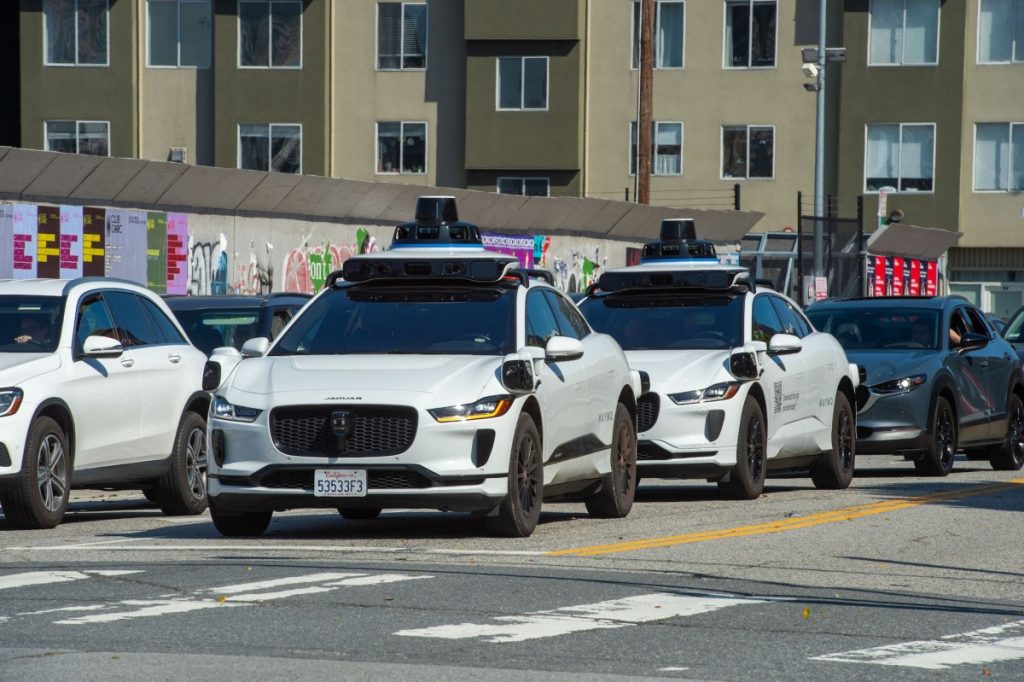
On July 4, a massive traffic jam occurred in San Francisco, leaving thousands of people stranded for hours. The traffic jam was caused by Waymo’s robotaxis, which became immobile due to heavy traffic and ran out of power. The incident further compounded the gridlock, trapping municipal shuttles and affecting key streets.
Mayor Breed has now asked state regulators to bolster rules for autonomous vehicles, citing two recent events that demonstrate the need for stricter regulations. The first event was a widespread power outage in December, which left dozens of Waymo vehicles stranded and paralyzed traffic. The second event was the Golden Gate Bridge fireworks show on July 4, which attracted 100,000 spectators and led to dozens of Waymo vehicles becoming immobile.
In a letter to the California Department of Transportation, Mayor Breed pointed out that California’s current regulatory framework does not adequately address how autonomous vehicles operate during major incidents, planned or not. She noted that the state’s challenge now is not just whether autonomous vehicles can operate safely under normal conditions but also whether they can perform reliably during extraordinary ones.
Mayor Breed has proposed four core operational capabilities that autonomous vehicle manufacturers should be able to demonstrate. These include the ability to immediately remove or relocate robotaxis from active travel lanes, adapt in real-time to changing traffic conditions, and share real-time operations data with local agencies. Additionally, companies would be required to demonstrate through testing that they can handle large influxes of people and traffic.
The San Francisco Mayor’s proposal comes as the city and surrounding areas have become a testbed for autonomous vehicle technology. Six companies, including Nuro, Waymo, and Zoox, hold driverless testing permits, which allow the vehicles to drive without a human safety operator behind the wheel. However, the area has also become the launch point for commercial services, which requires other permits from the DMV and CPUC.
Waymo is the largest autonomous vehicle operator in the Bay Area, with an estimated 1,000 robotaxis operating in the region today. However, the company’s scale has made it the focal point for regulators in San Francisco, and beyond. Mayor Breed has noted that Waymo’s voluntary actions, such as restricting its service on July 4 near the waterfront and assigning a representative to the city’s emergency center, are no longer enough to prevent incidents like the one on July 4.
Mayor Breed has stated that the four proposed requirements will not undermine autonomous vehicles but will strengthen them. She believes that by establishing statewide standards, the city can ensure that autonomous vehicles can operate safely and reliably, even during extraordinary events. The proposal is seen as a step in the right direction for the development of autonomous vehicles in California, and it remains to be seen how the state regulators will respond to the Mayor’s proposal.
Background on Autonomous Vehicles in San Francisco
San Francisco and the surrounding areas have been at the forefront of autonomous vehicle development, with several companies testing and deploying their technologies in the region. The city’s proximity to Silicon Valley and its open attitude towards innovation have made it an ideal location for companies to test and refine their autonomous vehicle systems.
However, the rapid growth of autonomous vehicle technology has also raised concerns about safety and regulation. The recent traffic fiasco involving Waymo’s robotaxis has highlighted the need for stricter regulations and more robust testing procedures to ensure that autonomous vehicles can operate safely and reliably in the region.
The city’s proposal for stricter regulations is seen as a positive step towards addressing these concerns. By establishing clear guidelines and standards for autonomous vehicle development and deployment, the city can help to ensure that these technologies are developed and deployed safely and responsibly.