South Korea’s Central Bank Hikes Interest Rate to Curb Inflation and Debt
South Korea’s central bank, the Bank of Korea, has taken a significant step to combat inflation and debt by raising its key interest rate for the first time in over three years. The decision was made to tighten the money supply and slow down the growth of the country’s high household debt.
The Decision and its Implications
The Bank of Korea raised its benchmark policy rate by a quarter percentage point from 2.5% to 2.75% in the first hike since January 2023. This decision is aimed at combatting inflation, which has been exacerbated by the war in the Middle East and the global boom in artificial intelligence spending. The war has led to higher energy costs, which have contributed to the country’s inflation rate exceeding 3% in both May and June.
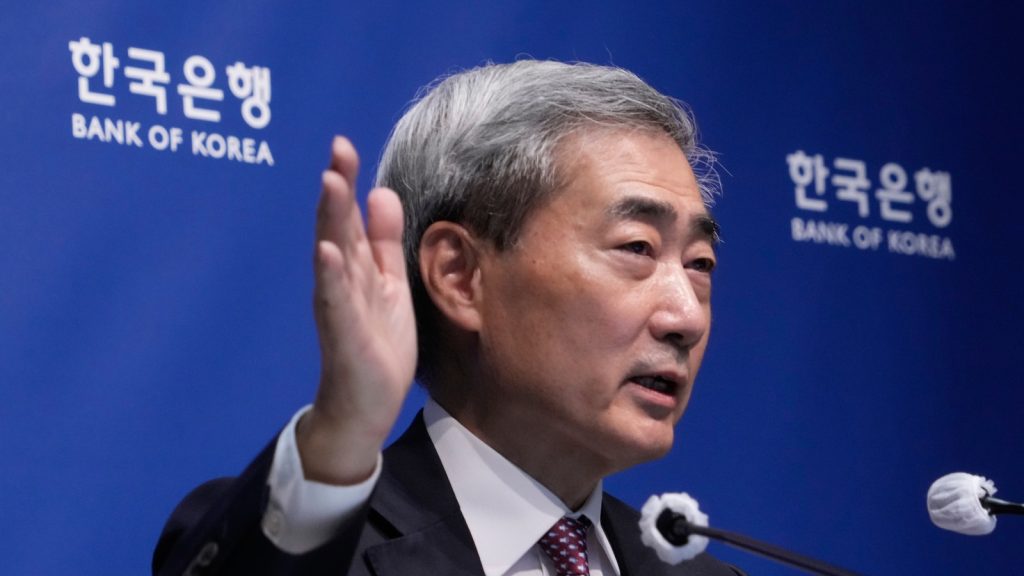
Additionally, the Bank of Korea is concerned about rising household debt, driven by higher real estate prices in Seoul and surrounding metropolitan areas, as well as a rally in technology stocks. The bank’s governor, Shin Hyun Song, stated that all seven members of the monetary policy committee supported the decision to raise the benchmark rate, citing the need to address inflation and financial stability.
Shin emphasized that the bank’s policy would not conflict with the government’s plans to increase spending to support the economy. He also noted that the timing and pace of any additional rate hikes would depend on incoming data. The Bank of Korea’s decision to raise interest rates is seen as a cautious step to balance the country’s economic growth and inflation concerns.
Despite the country’s chip-driven growth, the job market remains sluggish, particularly in manufacturing and sectors such as chemicals and energy, which have been hurt by disruptions linked to the war in the Middle East. The Bank of Korea’s decision to raise interest rates is expected to have a moderate impact on the economy, but it may also lead to a slow-down in growth.
Impact on the Economy and Consumers
The impact of the interest rate hike on the economy and consumers is expected to be moderate. The Bank of Korea’s decision to raise interest rates is aimed at reducing inflation and slowing down the growth of household debt. However, it may also lead to a slow-down in economic growth, which could have a negative impact on consumers.
Consumers who are planning to take out loans or mortgages may face higher interest rates, which could increase their borrowing costs. However, the interest rate hike may also lead to a decrease in the value of the Korean won, which could make imports cheaper and contribute to lower inflation.
Conclusion
In conclusion, the Bank of Korea’s decision to raise its key interest rate for the first time in over three years is a significant step to combat inflation and debt. The decision is aimed at tightening the money supply and slowing down the growth of household debt. While the impact of the interest rate hike on the economy and consumers is expected to be moderate, it may also lead to a slow-down in economic growth.
The Bank of Korea’s decision to raise interest rates is a cautious step to balance the country’s economic growth and inflation concerns. The impact of the interest rate hike will be closely monitored by the Bank of Korea and the government to ensure that it does not have a negative impact on the economy and consumers.