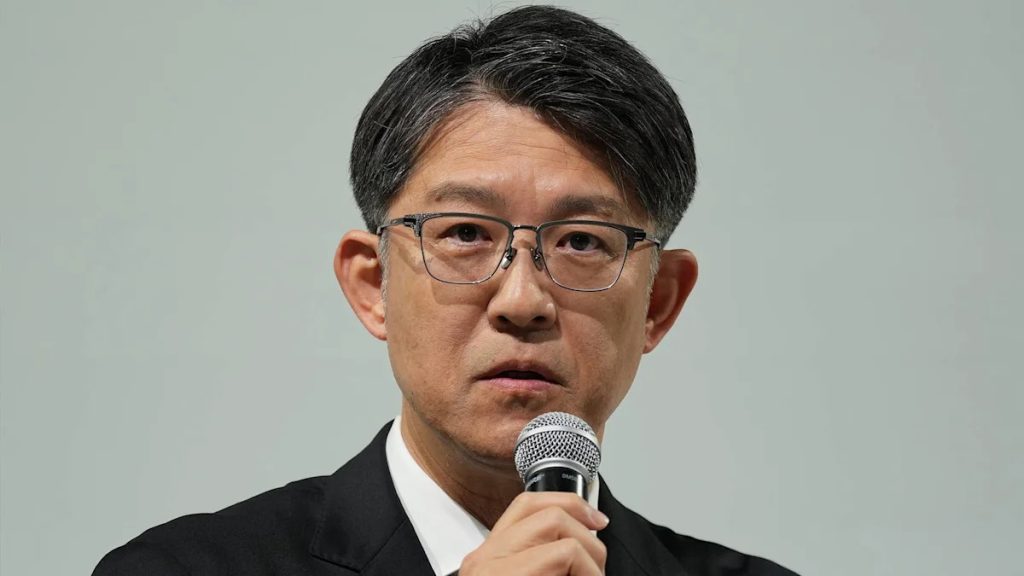
Toyota’s Koji Sato Calls for Closer Collaboration Among Japan’s Major Automakers
Koji Sato, Toyota’s chief industry officer and chairman of the Japan Automobile Manufacturers Association (JAMA), has emphasized the need for Japan’s major automakers to collaborate more closely in the face of intensifying competition from Chinese manufacturers.
In a recent interview with the media, Sato highlighted the importance of combining resources to reduce costs, improve efficiencies, and enhance sustainability. He believes that by sharing manufacturing standards and standardizing commodity components, Japanese automakers can free up engineers and capital to focus on developing new batteries, software, and associated technologies.
The proposal, which involves standardizing a list of commodity components across Japan’s seven major automakers, aims to simplify logistics and improve productivity. Sato estimates that standardizing wire harnesses alone could improve productivity tenfold, citing the example of the enormous supply base that currently produces parts with a wide range of specifications for Toyota, Nissan, Honda, Mazda, Subaru, Mitsubishi, and Suzuki.
According to Sato, standardizing these components need not compromise the brand identity of each Japanese automaker. If the proposal is approved, shared parts are not expected to be visible to customers, who will continue to enjoy the same brand differentiation they do presently. Toyota and Honda would remain fierce showroom rivals.
The proposal is seen as a critical response to the growing challenge posed by Chinese automakers. In May, Chinese brands collectively outsold Japanese vehicles in Europe for the first time. Sato’s plan is designed to prevent other Japanese brands from facing a similar dilemma, as Honda has already recorded its first annual loss this year due to poor EV sales and associated restructuring costs.
The industry shift is already underway, with Chinese brands rapidly gaining ground in Europe. Volkswagen has outlined plans to cut its lineup by up to 50%, and as many as 100,000 jobs are on the line as the carmaker faces rising losses due to greater competition and costly investments in electrification. Japan has not been immune to these developments, and Sato’s proposal could be the key to ensuring the country’s automakers remain globally competitive.
Smaller Japanese brands such as Mazda and Mitsubishi could benefit most from Sato’s plan, as they lack Toyota’s purchasing power and larger footprint. Curbing component costs would allow these automakers to invest in areas where they’ve traditionally lagged, such as battery advances, faster development cycles, and automation.
However, there are questions around whether Sato’s plan can be implemented quickly enough. Each automaker has its own factories, platforms, and suppliers, and brands such as Toyota and Subaru have already developed some vehicles together. Sato is asking for deeper collaboration that could be met with some resistance.
Automakers may not find common ground over who defines standards, and the plan would require supplier cooperation, too. At this stage, that’s not guaranteed. Nevertheless, Sato’s proposal demonstrates that traditional business models are no longer sufficient to stay competitive, even for the world’s largest automakers.
As the Japanese auto industry faces a massive period of transition, Sato’s call to action is clear: the time to further develop and evolve with the challenges and reform initiatives that the auto industry as a whole must face has arrived.