A Hidden Shark Nursery in Brazil’s Ilha Grande Bay
Located in the southeastern region of Brazil, Ilha Grande bay is home to a diverse array of marine life, including a surprising number of pregnant blacktip sharks. A recent discovery in Piraquara de Fora cove has shed light on the importance of this area as a nursery for these magnificent creatures.
For years, the local fishing community viewed blacktip sharks as a potential food source. However, thanks to the efforts of scientists and conservationists, this perception has shifted. The Brazilian Institute for Nature Conservation’s Sharks of Ilha Grande Bay project has been working tirelessly to protect the area and raise awareness about the importance of shark conservation.
Sharks are one of the most threatened groups of vertebrates on Earth, with over one-third of species at risk of extinction due to overfishing, habitat degradation, and climate change. Brazil’s coastline harbors a large diversity of shark species, making the protection of their habitats a crucial part of global ocean conservation.
The identification of nurseries such as the one in Piraquara de Fora cove is key to these efforts. According to experts, breeding areas are fundamental to ensuring the species survives throughout the Atlantic ecoregion.
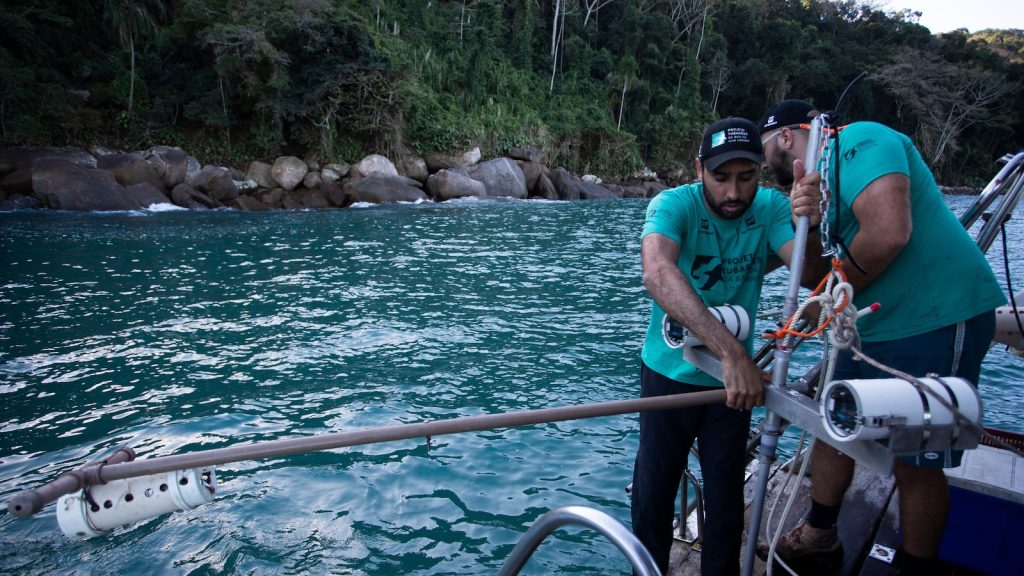
Scientists have been studying the behavior of the sharks in the cove, using monitoring equipment loaded with cameras to capture footage of the sharks in their natural habitat. This data will be used to advocate for greater conservation efforts and to raise awareness about the importance of shark conservation.
The project also focuses on other shark species, including sand tiger sharks and hammerhead sharks. In addition to conservation efforts, the project aims to start environmental education activities in schools to promote the importance of shark conservation.
The local community is also being engaged in the conservation efforts. Community leader Marlene Fernanda do Nascimento Martins said, ‘We used to fish and eat them, but conservationists explained that we shouldn’t do that anymore because of the animals themselves and the need to protect them.’
The project’s coordinator, José Truda Palazzo, said that their work to discourage local communities from eating shark meat is starting to have an impact. ‘We hope that more and more people come to understand that cação is shark, and shark meat is toxic, in addition to the fact that sharks are endangered animals.’
As the project continues to work towards its goals, the local community is beginning to see the benefits of shark conservation. ‘We’re a remote community with very limited resources,’ said Nascimento Martins. ‘So anything that comes along that can help us preserve our village is a good thing.’
The project’s efforts are not only beneficial for the sharks, but also for the local community. ‘We hope that ecotourism will develop into an additional source of income for the area,’ said Palazzo.
As the project continues to work towards its goals, it is clear that the protection of shark habitats is crucial for the survival of these magnificent creatures. By working together, we can ensure that these incredible animals continue to thrive for generations to come.