India’s Leap Towards Sustainable Transportation
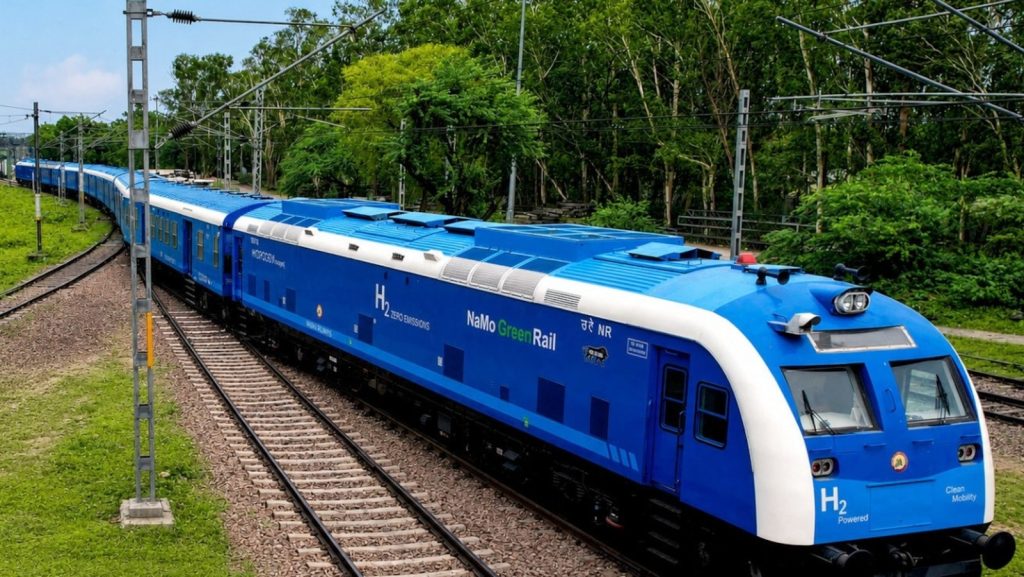
India has made a significant stride towards reducing its carbon footprint by introducing its first hydrogen-powered train, designed and built within the country. This pioneering move is aimed at expanding the use of clean energy in India’s vast rail network, marking a crucial step towards a greener future.
The newly launched train, christened the ‘NaMo Green Rail,’ is comprised of two hydrogen-powered driving cars and eight passenger coaches. It will operate in the northern state of Haryana, with the capability to run at speeds of up to 75 kph (47 mph) and carry a maximum of approximately 2,600 passengers, as stated by railway officials.
A Milestone in India’s Sustainable Development Efforts
The inauguration of the ‘NaMo Green Rail’ took place at Haryana’s Jind railway station, with Prime Minister Narendra Modi attending the event. Modi emphasized the significance of this achievement, stating, ‘This is a very significant day in the direction of self-reliant India and sustainable development.’
The introduction of hydrogen fuel cells in the train represents a substantial shift towards cleaner energy. Hydrogen fuel cells generate electricity by combining hydrogen and oxygen, producing water vapor as the sole direct emission. This technology has been successfully implemented in several other countries as an alternative to diesel on routes that are not fully electrified.
India’s efforts to develop green hydrogen and reduce carbon emissions are part of its broader strategy to achieve net-zero emissions by 2070. The Indian Railways is exploring hydrogen as a substitute for diesel on certain routes, further solidifying the country’s commitment to sustainability.
Key Features and Benefits of the Hydrogen-Powered Train
The ‘NaMo Green Rail’ is equipped with hydrogen storage and refueling infrastructure, allowing for the testing of this technology within India’s rail network. This pilot project will aid in the evaluation of the feasibility and effectiveness of hydrogen-powered trains in the country.
The benefits of hydrogen fuel cells extend beyond the environmental advantages. They offer improved efficiency, reduced noise pollution, and enhanced safety compared to traditional diesel engines. By transitioning to hydrogen-powered trains, India can significantly reduce its carbon footprint and contribute to a cleaner, healthier environment.
A Promising Future for Hydrogen-Powered Transportation
India’s introduction of its first hydrogen-powered train marks a significant milestone in the country’s journey towards sustainable transportation. This pioneering effort has the potential to pave the way for a widespread adoption of hydrogen-powered trains, ultimately contributing to a reduction in greenhouse gas emissions and a cleaner environment.
As India continues to push the boundaries of innovation and sustainability, the ‘NaMo Green Rail’ serves as a testament to the country’s commitment to a greener future.
With its unique blend of technology and environmental responsibility, the hydrogen-powered train is poised to revolutionize the transportation sector, offering a cleaner, safer, and more efficient alternative to traditional diesel engines.