WWII Recovery Efforts in Taiwan: Uncovering the Past
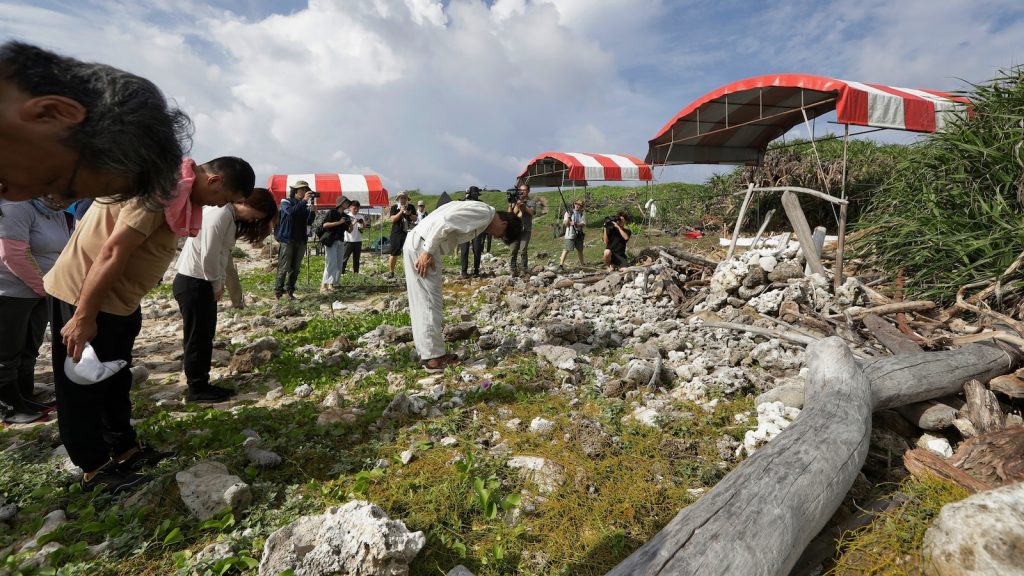
Experts from Japan and Taiwan have joined forces to uncover the remains of Japanese soldiers who lost their lives in a World War II sinking in the Bashi Channel. The excavation, which began on Monday, is a significant step towards giving closure to the families of the fallen soldiers.
The site, located in Hengchun Township, is believed to be the final resting place of over 4,700 Japanese soldiers and crew members who died in the 1944 attack by U.S. forces. According to historian Kazuko Tachi, only 65 survived the tragedy.
Tatsuaki Inoue, representing the Japan Association for the Recovery and Repatriation of War Casualties, expressed the organization’s gratitude to the Taiwanese authorities for their cooperation in the excavation. He stated, ‘We feel very sorry that we kept them waiting for such a long time. But on the other hand, we are very happy that we came to be able to excavate in search of their remains.’
Japan enacted a law in 2016 to accelerate the recovery of war remains, which has been extended through 2030 and includes expanded DNA testing. The Japanese government has implemented three plans to recover remains between the 1950s and the 1970s, with the aim of giving closure to bereaved families.
Historians and residents have spent years conducting interviews and collecting historical records to establish what might have happened to the bodies that washed ashore. They believe the bodies may have been gathered by residents and placed together in a rocky coastal area near the discharge outlet of Taiwan’s Third Nuclear Power Plant, where they may still lie.
More than 2.4 million Japanese soldiers died overseas during WWII, with approximately 1 million remains yet to be recovered. The excavation in Taiwan is a significant step towards giving closure to the families of the fallen soldiers and honoring their memories.
A monument dedicated to the spirits of Japanese service members who perished stands beside Chaoyin Temple, where an inscription reads: ‘We pray for the peace of all humanity in the world.’ The temple is dedicated to those who died in the Bashi Channel during the war, and inside stands a Japanese flag beside a statue of the Buddhist Bodhisattva Ksitigarbha, who is believed to guide and protect the souls of the departed.
Beatrice Trefalt, associate professor of Japanese studies at Monash University in Australia, noted that many families believe the government has a responsibility to acknowledge those who were conscripted and died during the conflict. She added that many families believe the government has a responsibility to acknowledge those who were conscripted and died during the conflict.
The excavation is expected to continue for a week, and if any remains believed to be Japanese are found and DNA samples can be extracted, they will be sent to Japan during a future mission.