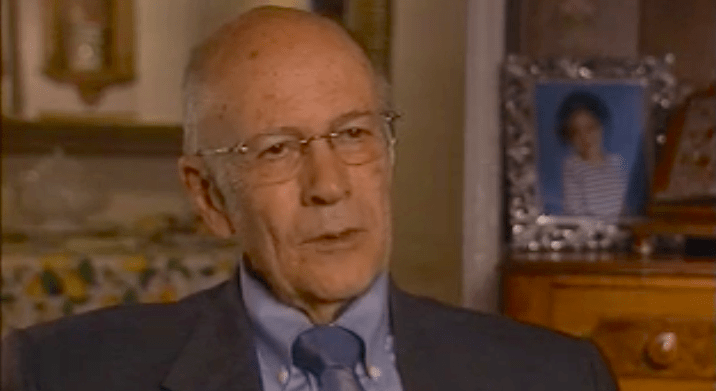
Dixon Q. Dern, a trailblazing entertainment attorney who left an indelible mark on the Hollywood landscape, passed away on July 19 at the age of 97. His remarkable career spanned decades, marked by significant milestones and achievements in the television industry.
Dern’s professional journey began as an in-house counsel for United Artists Television, Desilu, and CBS. He later founded his own firm, where he represented a diverse array of clients, including the Television Academy, Village Roadshow, and the Bob Hope Estate. This impressive roster of clients speaks to Dern’s exceptional reputation and his ability to navigate the complex world of entertainment law.
A Key Player in the Formation of CAA
One of the most notable chapters in Dern’s career involved his role in the formation of Creative Artists Agency (CAA). According to Dern, Michael Ovitz and his associates approached him with the idea of leaving William Morris’ television division to establish a new agency. Dern formed a corporation, and the five founders of CAA rented a small office with fold-up desks and tables. For approximately six months, Dern’s firm provided the necessary legal support to the fledgling agency.
Dern’s involvement in CAA’s early days was a testament to his ability to adapt to changing circumstances and his willingness to support innovative ideas. This collaboration would go on to shape the course of the entertainment industry, as CAA would become a dominant force in the representation of talent.
Arbitration and Labor Disputes
Dern’s expertise extended beyond agency formation, as he often served as an arbitrator in labor disputes. His experience in this area was particularly notable, as he worked under various industry collective bargaining agreements, including those of the Directors Guild of America (DGA) and the Writers Guild of America (WGA). This background in arbitration would serve him well in his later years, as he played a crucial role in resolving a long-standing feud between the Los Angeles and New York contingents of the Television Academy.
The dispute, which had been simmering for years, ultimately led to a two-day summit in 1976. Dern, along with other prominent industry figures, worked tirelessly to broker a detente between the two groups. The outcome of this effort was a significant agreement, which would go on to shape the future of the Television Academy. According to the terms of the dissolution, both the Los Angeles and New York chapters would retain their national status, with each group controlling specific award shows. The Los Angeles-based Television Academy would keep the Primetime Emmys, while the New York entity would retain the Daytime, News, Documentary, and Sports Emmys.
Back-End Television Financing and Pre-Sales
In addition to his work in agency formation and arbitration, Dern also made significant contributions to the development of back-end television financing and pre-sales to foreign distributors. His expertise in this area allowed him to navigate the complex world of television financing, often working with clients to secure the necessary funds to complete production. This work would go on to have a lasting impact on the television industry, as it paved the way for the development of new financing structures and the expansion of international markets.
A Legacy that Endures
Dixon Q. Dern’s remarkable career serves as a testament to his dedication to the entertainment industry and his ability to adapt to changing circumstances. Through his work as an attorney, arbitrator, and industry leader, he left an indelible mark on the Hollywood landscape. His legacy continues to inspire and influence the next generation of entertainment professionals, ensuring that his impact will be felt for years to come.