A Youth-Led Movement Gains Momentum in India
A joke that started on social media has turned into a significant protest movement in India, with young people leading the charge against the government’s handling of the education system and other issues. The movement, dubbed the ‘Cockroaches,’ has gained widespread attention and support, with thousands of young Indians taking to the streets to demand change.
The movement began in May, when India’s Supreme Court Chief Justice Surya Kant made a remark comparing some unemployed young people to ‘cockroaches.’ The comment sparked an online backlash, with many young Indians embracing the remark and adopting the cockroach as an emblem of resilience. Boston University student Abhijeet Dipke launched the Cockroach Janta Party, or Cockroach People’s Party, which quickly gained popularity on social media.
The campaign exploded on Instagram, attracting more than 21 million followers within days. Supporters posted memes, mock campaign slogans, and satirical commentary targeting the government over unemployment, limited job opportunities, and economic pressures. The movement’s online presence was further amplified by the hashtag #CockroachJanta, which trended on Twitter and other social media platforms.
As the movement gained momentum, Dipke returned to India from the U.S. and began organizing protests across cities and university campuses. The protests drew hundreds of young Indians, who demanded the resignation of Education Minister Dharmendra Pradhan, examination system reforms, and compensation for families of students who died by suicide after exam paper leaks.
The New Delhi sit-in initially drew a few hundred daily protesters, but the turnout soon grew into the thousands. The movement gathered more momentum after prominent activist Sonam Wangchuk joined the demonstration and began a hunger strike that has lasted more than three weeks. Police forcibly transferred Wangchuk to a hospital over the weekend, but the movement continued to grow, with thousands of protesters taking to the streets in support of the activist.
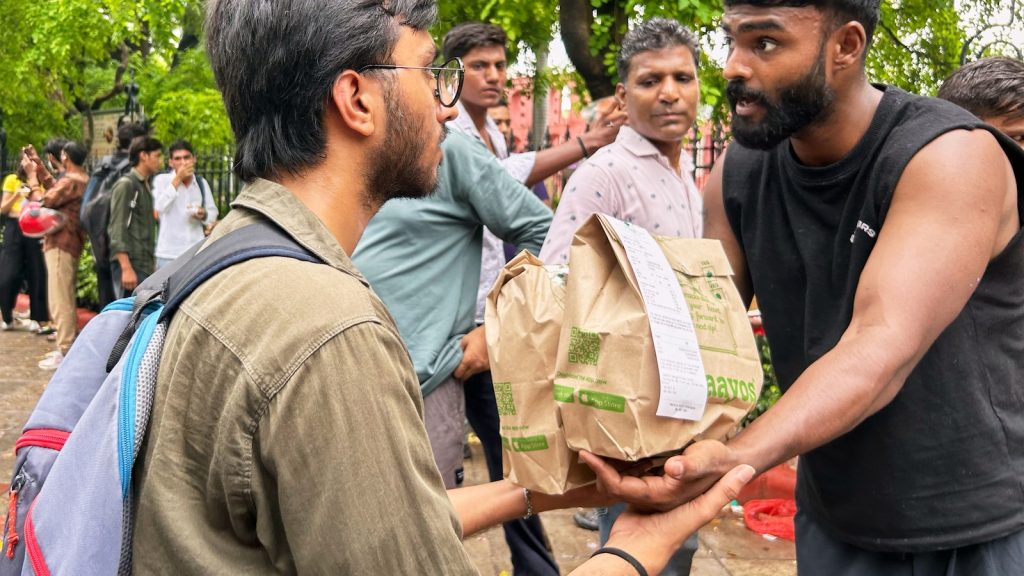
The movement’s appeal has widened beyond the core student base, with professionals and families joining the protests. Supporters across India have ordered food online with directions to share the deliveries with anyone at the protest sites. The movement’s decentralized structure, with volunteers and supporters funding their own travel to protests and relying on social media for mobilization, has allowed it to spread rapidly across the country.
The government initially rejected demands for talks with protesters, with Pradhan accusing protesters of working against the country’s interests. However, under mounting pressure, the government has begun to engage with the movement, with a government minister meeting with movement representatives in the first visible outreach. The talks failed to ease tensions, but the movement’s persistence has forced the government to acknowledge its demands.
The movement’s rapid spread beyond student groups points to growing frustration among young Indians and resembles a broader trend across South Asia, where youths have played a central role in anti-government movements in recent years. With hundreds of millions of voters under 35, including millions of first-time voters, India’s youth are a crucial voting bloc, and their growing frustration could have wider political implications ahead of future elections.
The movement’s decentralized structure and lack of a traditional political party structure have allowed it to spread rapidly across the country. Organizers say volunteers and supporters fund their own travel to protests and rely on social media for mobilization. The movement’s online presence has been further amplified by the hashtag #CockroachJanta, which trended on Twitter and other social media platforms.
The movement’s demands have gone beyond the education system, with protesters also calling for government accountability and an end to corruption. The movement’s persistence has forced the government to acknowledge its demands, and the government’s initial rejection of the movement has been replaced by a more conciliatory stance.