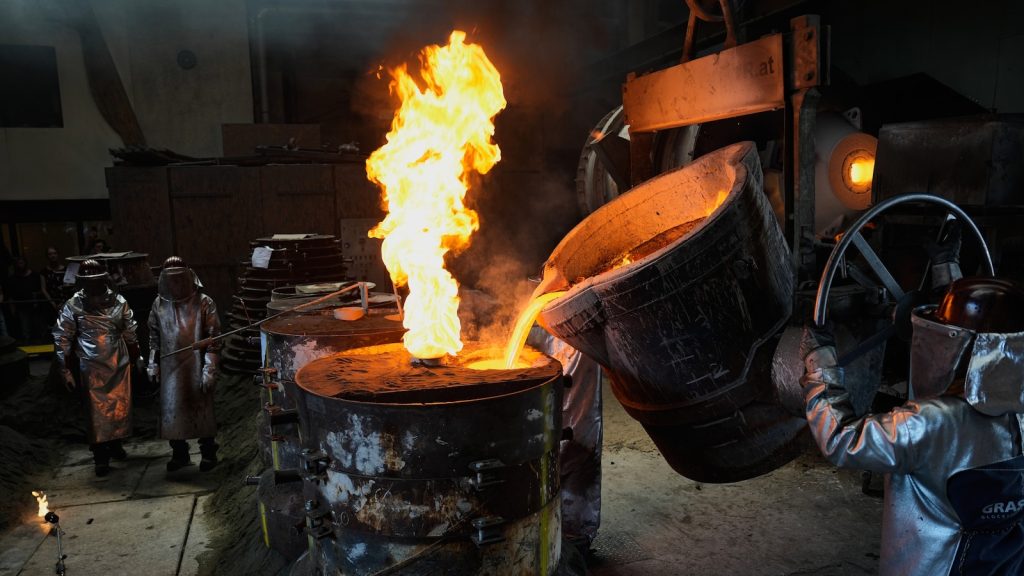
Austria’s Grassmayr Bell Foundry has been a stalwart of the bell-making industry for over 400 years, with its history dating back to 1599. Located in Innsbruck, western Austria, this family-owned business has survived wars, famines, epidemics, and economic challenges, making it one of the last remaining bell foundries in Europe.
Today, the Grassmayr brothers, Johannes and Peter, run the foundry, combining their family’s tenacity with innovation. They have successfully integrated modern technologies such as 3D-printing, scanning, lasers, and computer simulation apps into their production process.
The Art of Bell-Making
For centuries, the art of bell-making has remained largely unchanged. However, the Grassmayr brothers have innovated significantly, especially over the last 20 years. They have streamlined their production process, reducing the time spent on cleaning and polishing freshly cast bells from 30% of the total production time to just 10%.
The production cycle for making a bell typically takes three to four months. However, designing and forming the molds for a large bell can be a labor-intensive process, taking up to six months. The workers at the foundry carefully pour molten bronze into specially shaped molds held together with steel bands to create massive bells weighing several tons.
The process of casting a large bell is a complex one, involving the creation of a mold that can withstand the extreme pressure of the molten metal. The workers at the foundry use high-quality clay, encased in steel sleeves, to ensure the integrity of the mold. The liquid bronze can create up to 125 metric tons of pressure inside the molds, making it essential to use materials that can withstand such forces.
Despite the challenges, the Grassmayr brothers remain committed to their craft. They have cast bells for churches and cathedrals around the globe, with their creations found in over 100 countries, ranging from Japan to the United States. One of their most notable creations is the 3.3-meter-tall bell cast for Romania’s National Cathedral in Bucharest in 2016, weighing over 25 metric tons.
However, the modern bell-making industry is facing challenges. Fewer churches are being built, leading to a decline in demand for bells. Rising energy costs due to the war in Ukraine and increased labor costs are also affecting the industry. The price of high-quality bronze, which is a crucial material for making the best bells, has risen significantly, from 8 euros per kilogram to 23 euros per kilogram.
Adapting to Change
To stay afloat, the Grassmayr brothers have turned to restoring old bells, often using modern technologies to revive these historic instruments. Hundreds of defective bells from 12 European countries have been restored at the foundry, showcasing the family’s commitment to preserving the art of bell-making.
As the industry continues to evolve, the Grassmayr brothers remain dedicated to their craft. They are passionate about creating beautiful bells that bring joy and harmony to people around the world.
In an interview with The Associated Press, Johannes Grassmayr stated, ‘The important thing is that you have to calculate, form, and then cast the bell as a musical instrument.’ He emphasized the significance of innovation in the bell-making process, saying, ‘Certain things are just like they were 400 years ago. But we innovated a lot. Especially within the last 20 years, we’ve changed a lot.’
The Grassmayr brothers’ determination to preserve the art of bell-making is a testament to the enduring power of tradition and innovation.
As the world continues to change, the Grassmayr Bell Foundry remains a beacon of hope for those who cherish the beauty and significance of bells.