The NFL’s New Reality: Bijan Robinson and Jahmyr Gibbs are Worth Paying
For most of the last decade, NFL teams have operated under a simple premise when it comes to running backs: You can find them anywhere. Don’t use premium draft capital on the position, don’t hand out massive second contracts, and when one back gets expensive, find the next one in the draft, often outside of the first round.
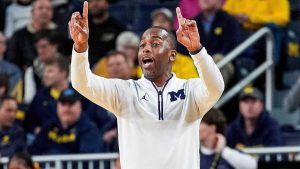
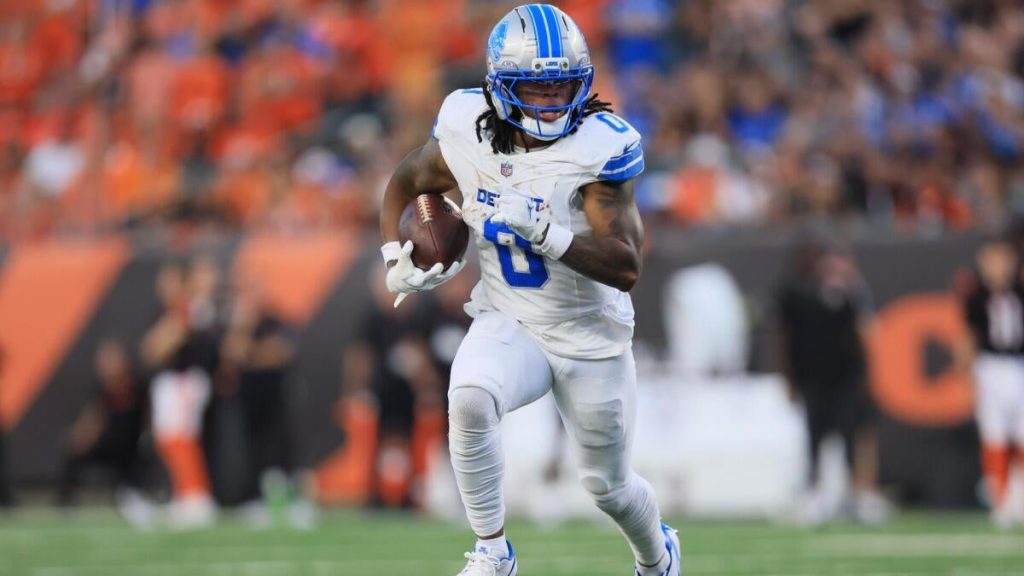
However, the arrival of Bijan Robinson and Jahmyr Gibbs, the No. 8 and No. 12 picks in the 2023 NFL Draft, are testing this philosophy. Both players are looking for new deals from the Falcons and Lions, and it’s time to reevaluate the conventional wisdom.
The Data Speaks: Robinson and Gibbs are Unusual
There’s plenty of evidence supporting the approach of finding running backs in later rounds. Alvin Kamara was a third-round pick, Aaron Jones went two rounds after that, and Kyren Williams was a fifth-rounder. Jonathan Taylor, Nick Chubb, and Derrick Henry all came off the board in Round 2. And the data confirmed part of the conventional wisdom: If a later-round back earns meaningful NFL opportunities, he can be efficient.
However, the data also reveals a different story. We looked at every running back drafted from 2016-23, tracking what they did over their first three NFL seasons, then used more than 500 individual RB seasons from 2015-25 to see just how rare Robinson’s and Gibbs’ combination of rushing, receiving, and efficiency really is.
Robinson has 5,648 yards from scrimmage through three seasons. Gibbs has 5,029. Among the running backs in our 2016-23 draft sample, only Christian McCaffrey (5,443) and Ezekiel Elliott (5,247) eclipsed the 5K mark through three seasons. This matters because the argument against paying running backs has never really been that they don’t produce. It’s that their output can be replaced much more cheaply.
So instead of asking whether Robinson and Gibbs are great players — we already know the answer — we tried to answer a more useful question: How easy would it actually be to replace them? The results weren’t especially kind to the ‘you can just draft another one’ posse.
The Odds of Replacing Robinson and Gibbs
If you take a randomly selected Day 2 running back from our sample, that player had a 42.5% chance of reaching at least half of Robinson’s production over the same three-season window, and a 45% chance of reaching half of Gibbs’. Get to 70% of their production, though, and those probabilities fall to 10% for Robinson and 20% for Gibbs. At 80%, we’re talking about 2.5% for Robinson — essentially one in 40 — and 10% for Gibbs. Not one Day 2 back matched either player’s total production.
Day 3 is where the ‘just draft another one’ argument really starts to fall apart. Of 119 backs taken on Day 3 in the sample, not one reached 70% of Robinson’s production over that three-season window. Not one reached 80% of Gibbs’, and only one reached 70% of Gibbs’ total.
The Catch: Draft Capital Buys Opportunity
There’s an important caveat here, and ignoring it would overstate the case. First-round running backs are given more opportunities than later picks, and by a lot. Among drafted RBs, players selected in the top 20 averaged 873 touches during their first three seasons. Picks 51-100 averaged 396, and players selected after Pick 150 averaged just 153. The relationship was substantial: where a back was drafted, nearly half of the differences in workload were accounted for.
The Real Challenge: Replacing Everything Else
Replacing an RB isn’t the same as replacing Bijan or Jahmyr. It’s about replacing everything else that comes with it. Robinson’s 2025 season is the best example. He finished with 2,298 yards from scrimmage, but we wanted to know how difficult it would be to replicate his entire profile. So we looked at 508 NFL running back seasons from 2015-25 with at least 100 carries and compared rushing yards, receiving yards, yards after contact per attempt and yards per route run.
Only eight of those 508 seasons reached even 70% of Robinson’s production in all four categories. At an 80% threshold, there were two: Saquon Barkley in 2018 and Robinson himself in 2025. At 90%, there was only Robinson.
Gibbs isn’t quite the singular statistical phenomenon, but he’s still operating in elite company. Just 3.1% of those 508 seasons reached 80% of his 2025 production across the same four categories, and 1.4% reached 90%. His value also extends well beyond rushing production; his 2025 route grade ranked in the 98th percentile of the qualifying RB seasons.
The Other Argument: Why Commit Big Money to a Player?
Then there’s the other argument against paying running backs: Why commit big money to a player just as the wear and tear starts to catch up with him? Todd Gurley remains the cautionary tale, and it’s a legitimate one. But when we looked at the 2016-20 draft cohorts with six complete NFL seasons, the broader results weren’t nearly as ominous.
Among backs with at least 3,500 scrimmage yards in Years 1-3, 10 of 11 produced another 3,000-plus yards in Years 4-6, with median production retention of 87.8%. All five backs who topped 4,000 yards in their first three seasons — McCaffrey, Elliott, Taylor, Kamara, and Chubb — produced at least 3,000 more over the next three. That doesn’t eliminate injury risk, but it does challenge the idea that paying an elite 24- or 25-year-old running back means buying the decline.
For Robinson and Gibbs, Years 4-6 are precisely the seasons Atlanta and Detroit would be trying to secure. So what are they actually worth? And that brings us to the money. CBS Sports salary-cap expert and former agent Joel Corry recently laid out the case for Robinson and Gibbs.