Drought-Stricken Europe: Dutch Dikes at Risk and German River Trade Affected
The Netherlands and Germany are facing the severe consequences of a European heat wave that has brought drought and sparked devastating wildfires in France, Spain, Portugal, Crete, and elsewhere.
In the Netherlands, a team of 140 volunteers from the Schieland en de Krimpenerwaard water corporation are responsible for checking about 100 kilometers (60 miles) of dikes, reporting any problems they find. Despite not discovering any major issues so far this dry summer, they remain vigilant, anticipating potential problems that may arise.
According to Peter van Duijvendijk, a flood defense manager at the Schieland en de Krimpenerwaard water corporation, the team’s role is crucial in maintaining the integrity of the dikes. ‘The volunteers are our eyes and ears on the dike,’ he explained.
The Netherlands’ low-lying areas, some of which are reclaimed land, are particularly vulnerable to drought. In these regions, the peat used to construct the dikes loses its strength when dry, increasing the risk of water seeping through the barrier and causing flooding.
As a result, water authorities have implemented measures to maintain adequate supplies of fresh water for farmers. However, this has led to restrictions on irrigating crops, warning of smaller fruit harvests and rising prices this season.
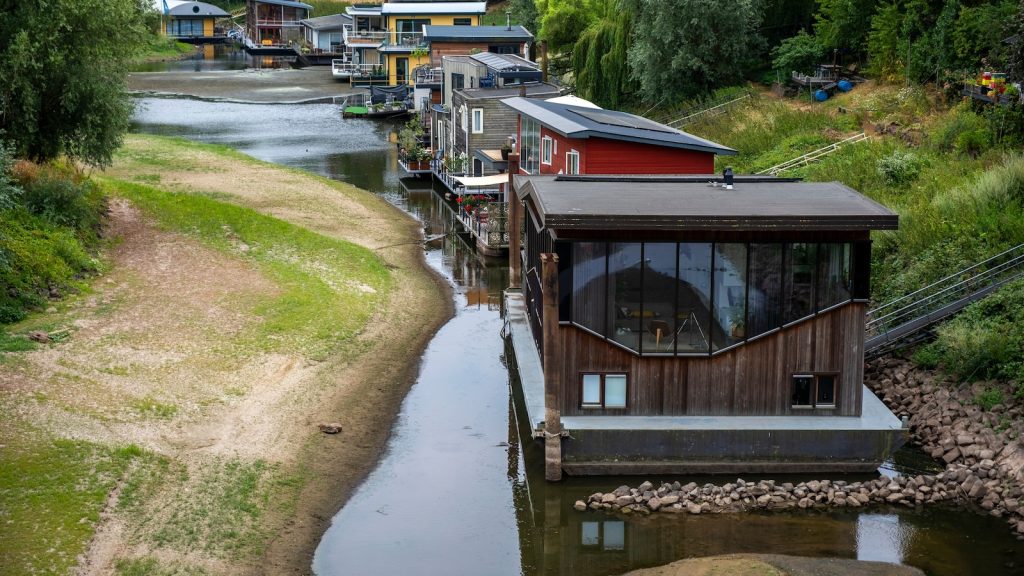
The drought is also affecting German river trade, with cargo ships that ply the Rhine and its offshoots forced to carry significantly less freight or risk running aground in shallow navigation channels. In Cologne, Germany, the Rhine’s water level dropped below the record low set in October 2018, causing a ‘devastating impact’ on shipping, according to Marcel Beck, manager of the western German ports of Neuss, Düsseldorf, and Cologne at RheinCargo.
The situation is further complicated by the fact that the drought is not evenly distributed throughout the year. In the winter, the Netherlands drains water quickly to prevent flooding, but this can lead to a shortage of water in the summer. Vince Kaandorp, a groundwater hydrologist at Deltares, an independent Dutch water research institute, suggests that simple measures, such as adding hedges near rivers, can slow down water and allow it to seep into the ground.
Authorities are studying how to turn soil into ‘sponges’ to better hold water throughout the year. This would help alleviate the pressure on water supplies and reduce the risk of flooding in the Netherlands’ low-lying areas.
The Impact of Climate Change on European Waterways
As the drought continues to grip Europe, the consequences for the Netherlands and Germany are becoming increasingly clear. The risk of flooding in the Netherlands’ low-lying areas is increasing, while the German river trade is facing significant challenges due to the reduced water levels.
The situation highlights the urgent need for sustainable water management practices in Europe. By adopting measures to reduce water waste and increase water storage capacity, authorities can mitigate the effects of drought and ensure the long-term health of Europe’s waterways.
Conclusion
The drought-stricken Europe is a stark reminder of the urgent need for sustainable water management practices. The Netherlands and Germany are facing significant challenges due to the reduced water levels, and it is essential that authorities adopt measures to reduce water waste and increase water storage capacity. By working together, we can ensure the long-term health of Europe’s waterways and prevent the devastating consequences of drought.
• 140 volunteers from the Schieland en de Krimpenerwaard water corporation are responsible for checking about 100 kilometers (60 miles) of dikes in the Netherlands.
• The drought is affecting German river trade, with cargo ships forced to carry significantly less freight or risk running aground in shallow navigation channels.
• The situation is further complicated by the fact that the drought is not evenly distributed throughout the year.
• Authorities are studying how to turn soil into ‘sponges’ to better hold water throughout the year.