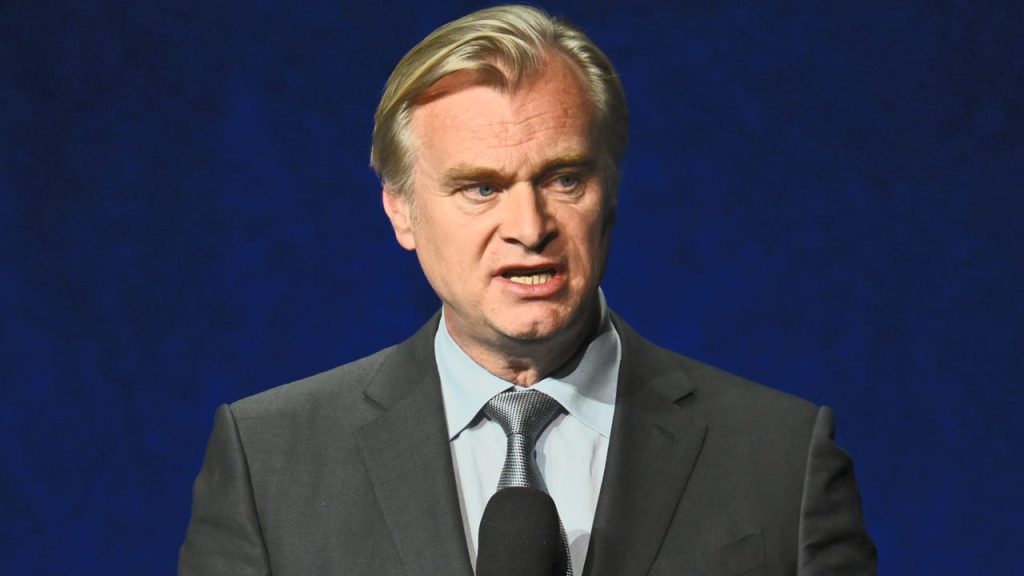
Renowned film director Christopher Nolan has shared his thoughts on the growing trend of younger audiences dismissing AI-generated content in the entertainment industry.
In a recent interview with The Telegraph, Nolan discussed the increasing disinterest among younger viewers towards virtual environments and AI-driven storytelling. As his adaptation of Homer’s epic poem, The Odyssey, prepares to hit theaters on July 17, 2026, Nolan shed light on why he believes this shift in audience preference is taking place.
Nolan, known for his work on The Dark Knight trilogy and Oppenheimer, pointed out that the recent success of low-budget horror films like Backrooms and Obsession has shown that young audiences are drawn to practical effects and sets rather than relying on virtual environments.
A Rejection of AI Slop
Nolan emphasized that younger viewers are not only rejecting AI-generated content but are also doing so with an ‘immediate and harsh’ judgment. He believes that this is due to their familiarity with the online world, which allows them to easily identify and dismiss AI-driven storytelling.
According to Nolan, his children, who are in their late teens and early twenties, have been particularly critical of AI-generated content. They see through the ‘AI slop’ and are not fooled by the supposed advancements in technology. This rejection of AI-driven storytelling is not limited to his children, as Nolan notes that it is a broader trend among younger audiences.
Nolan’s comments echo the sentiments of other filmmakers who have expressed concerns about the role of AI in the entertainment industry. James Cameron, Seth Rogen, and Gore Verbinski have all shared their fears about the potential impact of AI on storytelling. However, Nolan’s observations suggest that it is younger viewers who may be more wary of AI-generated content than anyone else.
A Renewed Interest in Tactile Storytelling
Nolan believes that the rejection of AI-generated content is a sign of a renewed interest in more tactile and real forms of storytelling. He notes that after years of driving towards heavily virtual environments, the industry is now seeing a shift towards more practical and hands-on approaches to storytelling.
Nolan’s adaptation of The Odyssey features several practical effects, including a 60-foot Cyclops puppet that was recreated in Psychro Cave, the believed birthplace of Zeus. This emphasis on practical effects is a deliberate choice by Nolan, who wants to create a more immersive and engaging experience for his audience.
Nolan’s comments on the rejection of AI-generated content serve as a reminder of the importance of adapting to changing audience preferences. As the entertainment industry continues to evolve, it is clear that younger viewers are driving the trend towards more practical and tactile forms of storytelling.