Brazil and Peru Strengthen Cooperation to Safeguard Indigenous Territories
In a significant move to protect the rights of Indigenous communities along their shared border, Brazil’s Ministry of Indigenous Peoples has announced the signing of a memorandum of understanding with Peru’s Ministry of Culture.
The agreement, which is expected to be published in the coming weeks, aims to strengthen cooperation between the two countries in safeguarding Indigenous territories, particularly those of isolated peoples along the border.
According to the Brazilian government, the memorandum has been under negotiation since 2024 and will establish a framework for sharing information and coordinating protection efforts. This collaborative approach is crucial in addressing the shared threats faced by Indigenous communities, including invasions, illegal activities, and pressure on traditional lands.
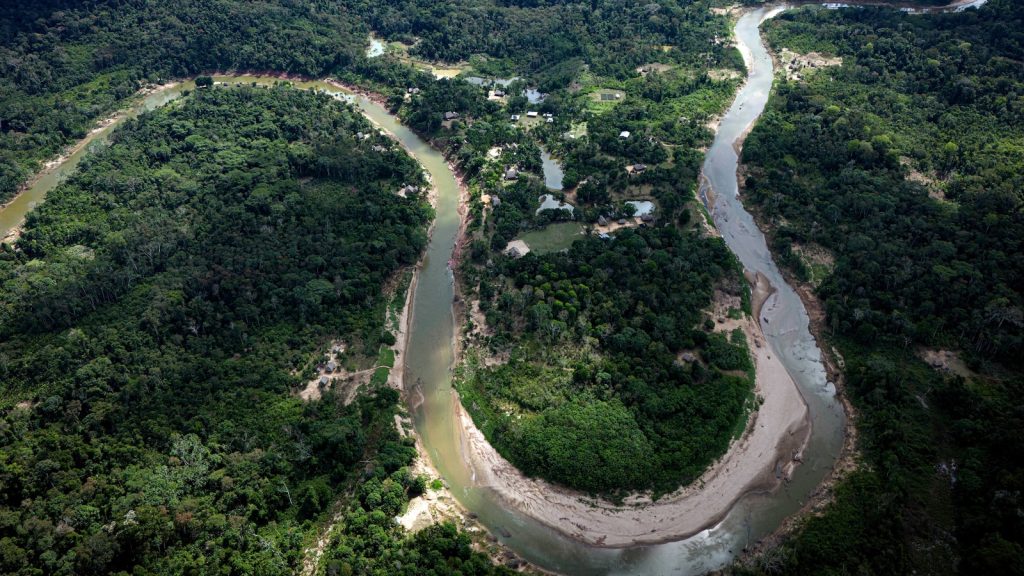
The announcement comes in the wake of a recent incident where a group of Ashaninka Indigenous leaders reported an invasion of their land by five armed men carrying machine guns. The Ashaninka territory spans the Brazil-Peru border in the western Amazon, and the community has been seeking urgent protection for their territory.
Gangs and drug traffickers have been increasingly encroaching on Ashaninka land, using the rivers in the Amazon and adjacent land for drug routes. Experts say that protecting Indigenous land is one of the most effective ways to curb deforestation in the Amazon, the world’s largest rainforest and a key regulator of global climate.
However, the very forests these communities help protect leave them vulnerable. Dense tree cover in remote, hard-to-reach areas offers attractive hiding sites for drug traffickers. In response to the growing threats, the Brazilian government has launched an investigation into the attacks on Ashaninka territory and has deployed troops to reinforce its presence along the border.
The operation aims to prevent and combat incursions into Indigenous territories, criminal organizations, drug trafficking, environmental crimes, and other cross-border offenses. In a separate statement, the Brazilian Army said it had reinforced its presence along the border by deploying about 30 troops to the area.
The Army also stated that it continues to patrol the region and that preliminary information from Indigenous leaders and government agencies suggests the armed men were Peruvians who entered the Indigenous territory from across the border.
The Brazilian government’s efforts to safeguard Indigenous territories are a crucial step in protecting the rights of these communities and preserving the Amazon rainforest. The agreement with Peru demonstrates a commitment to cooperation and a shared responsibility in addressing the complex challenges faced by Indigenous communities along their border.
The Brazilian government’s decision to launch an investigation and deploy troops to the area is a significant step in addressing the growing threats faced by Indigenous communities. The operation aims to prevent and combat incursions into Indigenous territories, criminal organizations, drug trafficking, environmental crimes, and other cross-border offenses.
The Ministry of Indigenous Peoples has emphasized the importance of a coordinated response to shared threats, such as invasions, illegal activities, and pressure on traditional lands. The ministry has also highlighted the need for a framework for sharing information and coordinating protection efforts, which is expected to be established through the memorandum of understanding.
The agreement with Peru is a significant development in the efforts to protect Indigenous territories along the Brazil-Peru border. The collaboration between the two countries demonstrates a commitment to cooperation and a shared responsibility in addressing the complex challenges faced by Indigenous communities.
The Brazilian government’s efforts to safeguard Indigenous territories are a crucial step in protecting the rights of these communities and preserving the Amazon rainforest. The agreement with Peru demonstrates a commitment to cooperation and a shared responsibility in addressing the complex challenges faced by Indigenous communities along their border.
The operation aims to prevent and combat incursions into Indigenous territories, criminal organizations, drug trafficking, environmental crimes, and other cross-border offenses. The Brazilian government’s decision to launch an investigation and deploy troops to the area is a significant step in addressing the growing threats faced by Indigenous communities.
The Ministry of Indigenous Peoples has emphasized the importance of a coordinated response to shared threats, such as invasions, illegal activities, and pressure on traditional lands. The ministry has also highlighted the need for a framework for sharing information and coordinating protection efforts, which is expected to be established through the memorandum of understanding.
The agreement with Peru is a significant development in the efforts to protect Indigenous territories along the Brazil-Peru border. The collaboration between the two countries demonstrates a commitment to cooperation and a shared responsibility in addressing the complex challenges faced by Indigenous communities.