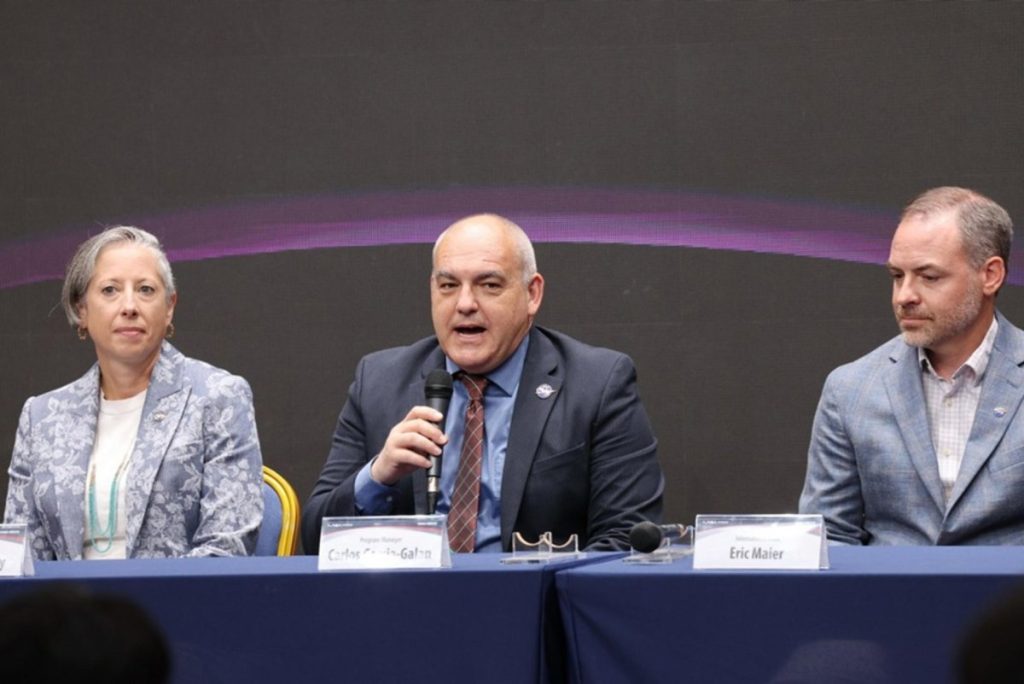
As the world’s leading space agency, NASA is taking a crucial step in establishing a permanently occupied base on the moon by the 2030s. To make this ambitious goal a reality, they are looking for international cooperation and have identified South Korea as a key partner in this endeavor.
Citing South Korea’s demonstrated capabilities in satellite communications, robotics, and mobility, NASA’s Moon Base program manager, Carlos García-Galán, emphasized the importance of global collaboration in achieving this nearly impossible task.
Cooperation and Capabilities
García-Galán pointed out that South Korea has both an interest in space exploration and the necessary capabilities to pursue it. Additionally, the country has a thriving industry that can turn those capabilities into reality. This synergy will be crucial in developing the technologies needed to establish a sustainable human presence on the lunar surface.
The Three-Phase Moon Base Initiative
NASA’s Moon Base initiative is a three-phase program aimed at creating infrastructure supporting a sustained human presence on the moon and future missions deeper into space. The first phase, running through 2029, involves sending uncrewed rovers and resource-prospecting equipment to survey the lunar surface.
During the second phase, scheduled from 2029 through 2032, NASA plans to focus on establishing initial infrastructure and operating capabilities that will allow astronauts to remain on the moon. The third phase will begin after 2032, with the development of a semipermanent base capable of supporting a continuous human presence.
Technologies and Opportunities
The Moon Base initiative will require advanced technologies that have never been developed or used at such a scale. García-Galán highlighted the potential opportunities for private companies and the emerging space economy, stating that developing these technologies could generate substantial economic benefits and help expand the commercial space industry.
South Korea’s Role in the Moon Base Initiative
South Korea has already demonstrated its capabilities through cooperation on Danuri, the country’s first lunar orbiter. NASA Deputy Associate Administrator Nujoud Merancy praised South Korea’s outstanding communications and satellite technologies, as well as the country’s strengths in robotics and mobility.
Merancy emphasized that South Korean companies have the potential to contribute significantly to the lunar base while creating a lasting foundation for research and industrial development.
The initiative’s ultimate goal is to establish a long-term human presence on the moon, with the lunar settlement resembling a small city similar to a research station in Antarctica. The settlement will include transportation and cargo systems, residential areas, power-generation equipment, and facilities capable of producing oxygen.
South Korea’s participation in the Moon Base initiative will not only expand cooperation between the two countries but also broaden the scope of their partnership from existing space projects to lunar surface operations and deep-space exploration.
Conclusion
NASA’s Moon Base initiative represents a historic opportunity for international cooperation and the development of cutting-edge technologies. By partnering with South Korea, NASA can leverage the country’s expertise and capabilities to achieve its ambitious goal of establishing a sustainable human presence on the moon.