Fed Chairman Kevin Warsh’s Ambiguous Signaling Raises Concerns About Inflation Strategy
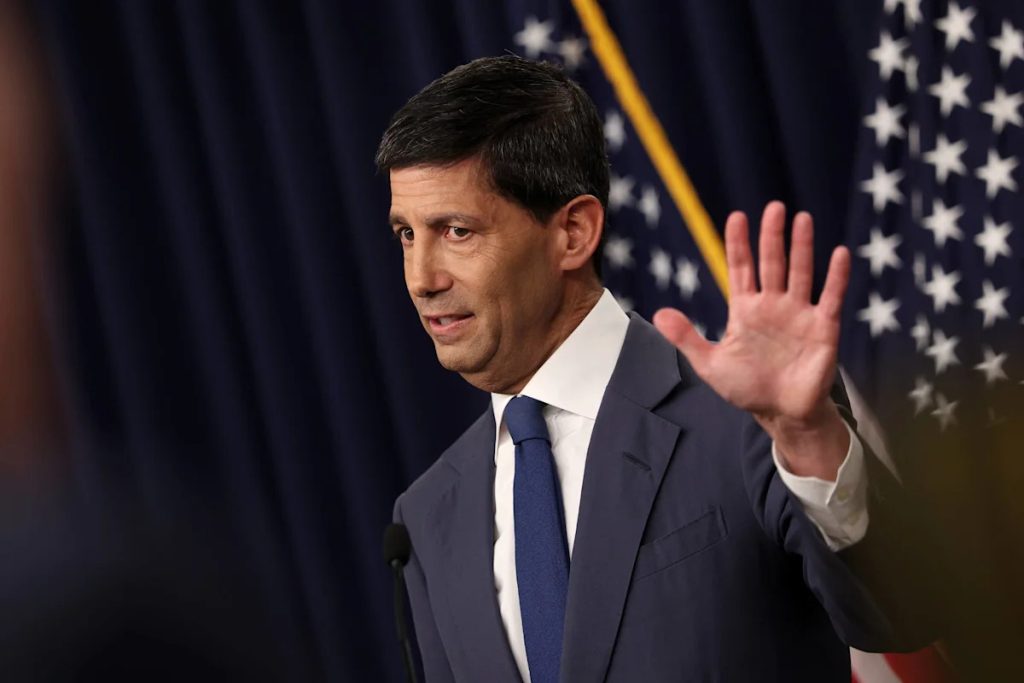
The latest data from the Federal Reserve’s preferred inflation indicator, the Personal Consumption Expenditure (PCE) price index, came in lower than consensus in June, primarily due to a drop in energy prices. However, during his second Fed Day as Chairman of the U.S. central bank, Kevin Warsh hemmed and hawed over whether the PCE price index would continue to serve that role, leaving the market uncertain about the central bank’s inflation strategy.
As reported earlier, the lack of transparent strategy really ticked off Wall Street, more than the Federal Open Market Committee’s (FOMC) decisive 9-3 vote to hold short-term benchmark interest rates steady on July 29. Bonds sold off sharply, with the 30-year Treasury hitting 5.22% within hours of Warsh’s post-meeting press conference.
J.P. Morgan abruptly shifted its forecast for the Fed’s interest-rate outlook to a hawkish one, with Chief U.S. Economist Michael Feroli saying the Fed would raise interest rates by 25 basis points in December instead of the second half of 2027. The note to clients expects the Fed to continue to hold the Federal Funds Rate at 3.75%-4.00% after the December hike but added that the risk of a September rate increase is real.
Feroli’s research update said that Warsh’s ambiguous signaling raises concerns about the central bank’s inflation strategy. ‘It’s hard to know what to make of Warsh’s remarks, which involved a lot of well-turned phrases but little in the way of a coherent macro view,’ Feroli wrote to clients, adding that the new Chairman ‘once again failed to specify how he intended to achieve his stridently asserted inflation resolve,’ creating additional policy uncertainty for financial markets.
The Fed’s congressional dual mandate requires full employment and price stability. The FOMC post-meeting statement was a terse five paragraphs that described the economic activity as ‘expanding at a solid pace despite elevated uncertainty that owes, in part, to the conflict in the Middle East.’ It cited the energy shocks that have driven up prices in some sectors.
Warsh has repeatedly vowed the Fed would bring inflation down to its 2% target – a measure it has missed for the last 63 months. He deflected questions from reporters on July 29 as to how this will be achieved with responses that included that there is ‘no magic wand.’
However, the question remains: at what point will Warsh actually act? As Yardeni Research President Ed Yardeni told CNBC on July 30, ‘What’s it going to take?’ The answer remains unclear, leaving the market uncertain about the central bank’s inflation strategy.
Lower interest rates support hiring but can fuel inflation, potentially leading to an inflationary spiral. Higher rates cool prices but can weaken the job market, increasing the cost of borrowing and further stifling economic activity. The rate-setting FOMC voted unanimously in June to hold its benchmark Federal Funds Rate target in a range of 3.5% to 3.75%. However, the minutes of the June FOMC meeting showed policymakers splitting their views on inflation risk and the impact on interest rates with a rising hawkish tinge to the quarterly dot plot.
The three Fed presidents who voted for a 25 basis-point hike in July – Cleveland’s Beth Hammack, Minneapolis’ Neel Kashkari, and Lorie Logan of Dallas – expressed concerns about the impact of underlying inflation after the June meeting based in part on comments and observations from consumers and businesses in their regions. Warsh’s remarks cast doubt on the new chair’s credibility in delivering lower inflation, J.P. Morgan said in the July 29 note, adding that this could increase the urgency for the rest of the committee to act on its mandate for price stability.
July’s FOMC resets traders’ Fed interest-rate bets, with traders pricing in a 65.2% chance of a rate hike in September, down from 81% before the policy statement, according to the CME Group FedWatch Tool. The futures markets are also pricing in an 82.7% cumulative probability that the funds rate will be higher than the current 3.50%-3.75% by the December FOMC meeting.
BofA Global Research forecasts three rate hikes starting in September. Long-standing Fed dove Citigroup maintained its forecast for rate cuts in October and December this year and one in January 2027 following the July FOMC meeting.
The key drivers behind the June PCE drop include a 0.1% month-over-month decline and a fall from 4.1% to 3.7% year-over-year. Excluding food and energy, the gauge rose less than forecast. Gasoline prices have risen in July due to military escalation in the Iran War, once again pressuring household budgets and the latest data showed the saving rate fell in June to the lowest level since 2022.
Meanwhile, the inflation-adjusted GDP increased an annualized 1.5% in the three months through June, lower than the 2.1% consensus. Consumers ‘looked through the price pressures and they powered on – the question is how much longer they will be able to do that,’ Barclays Senior U.S. Economist Pooja Sriram told Bloomberg. ‘Tax refunds have run out and income gains are slowing, so that cushion that we point to is getting smaller in the next quarter.’